Introduction
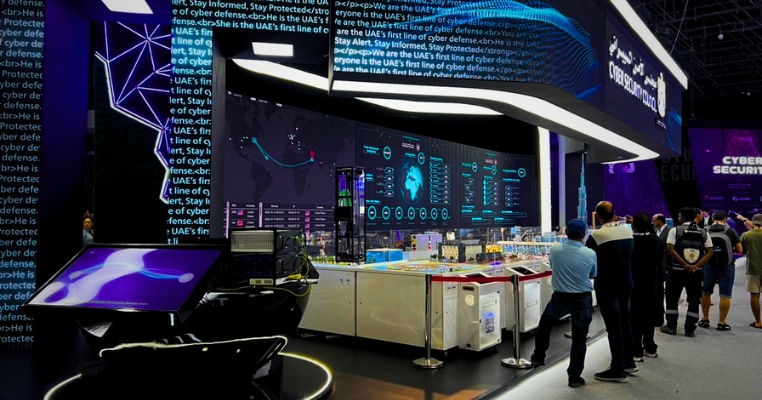
GITEX Global 2025 was more than a tech show — it was a strategic battlefield, where nations, hyperscalers, and industry giants laid claim to the future of computing sovereignty. From announcements around the UAE’s Stargate AI campus, the unveiling of sovereign AI infrastructure, to heated debates on AI-driven cybersecurity, this edition underscored that control over compute, data, and trust is now central to national power.
In this post, we unpack the most consequential trends from GITEX 2025: who’s advancing national AI stacks, how cybersecurity is being recast in the AI era, and why scaling AI infrastructure (from data centers to “AI factories”) is the hidden war behind the shiny demos.
1. Sovereign AI & National Stacks: Who’s Building the Backbone?
The Stakes of Sovereignty
Nations no longer want to outsource their AI decision-making to foreign cloud providers. Sovereign AI means building a trusted stack — hardware, models, orchestration, governance — designed to run locally (or at least under national control). GITEX 2025 placed this front and center.
As one UAE official put it, sovereignty isn’t isolation — it’s about having choice: what to host locally, what to federate, and how to interconnect.
G42, Core42, and the Intelligence Grid
One of the most visible plays is by G42 via its infrastructure arm Core42, which is presenting its “Intelligence Grid” — essentially a blueprint for AI-native nations that fuse compute, intelligence, and digital infrastructure.
That C42/“Core42 as the digital infrastructure arm” narrative is critical. It positions them not just as a service provider but as the builder of the societal brain for national AI.
Stargate UAE — Powering the Next Frontier
A marquee reveal: the Stargate AI campus, a multi-gigawatt hub backed by G42 and built in partnership with technology firms like Nvidia, OpenAI, Cisco, Oracle, and SoftBank.
G42 expects the first 200 MW of the 5 GW project to come online in 2026.
Cerebras, a U.S. AI chip company, is also committing infrastructure to Stargate, further reinforcing the blend of national and global players.
Global Players in the Mix
The conversation isn’t just local. Giants like Microsoft and OpenAI are active participants in the strategic debates — both as collaborators and challengers in who gets to define the AI stack’s shape. (See e.g. commentary in Entrepreneur: “OpenAI, G42, and Microsoft Shape the Future of AI Nations” )
Also, Alibaba Cloud announced a second data center in Dubai during GITEX, reinforcing how global cloud players are placing bets on regional infrastructure.
What This Means for National Power
- Countries with the infrastructure to host sovereign AI get to exert digital autonomy.
- Control of data, policies, and compute becomes a geopolitical lever.
- Alliances matter: getting access to advanced chips, IP, and model architectures often depends on export/regulation agreements.
- The battle isn’t only about scale — it’s about trust, auditability, and transparency in AI stacks.
2. AI + Cybersecurity: The Converged Battlefield
From Defense to Offense
At GITEX, multiple panels and sessions addressed how AI is redefining cybersecurity. Adaptive DDoS defense, automated threat hunting, and AI-based anomaly detection were front and center.
One session, “Strengthening Data and AI Infrastructure Security,” highlighted how AI becomes both a target and a tool in the next generation of attacks.
xIoT Security & Unified Platforms
As more devices connect — from industrial IoT to medical devices — the security perimeter expands. Phosphorus, for example, presented its Unified xIoT Security Management platform to discover, secure, and monitor IoT, IIoT, OT, and medical IoT devices.
Public-Private Responsibility
Another theme: cybersecurity can’t be solved by governments or vendors alone. Panels like “Public-Private Cybersecurity Governance: A Shared Responsibility” delved into how standards, regulation, and cooperative defense models must evolve.
Blockchain, zero trust, federated learning (secure model sharing), and privacy-enhancing computation also surfaced in side discussions as enablers of resilient trust.
Security as Infrastructure, Not Layer
Whereas in past paradigms security was a layer on top, in GITEX 2025 it’s increasingly positional: baked into the AI stack. From hardware enclaves (secure chips) to real-time model risk scoring, security becomes inseparable from the compute fabric.
3. Data Centers, AI Factories & the Infrastructure of Scale
The Hidden Backbone
Show-stopping demos are flashy, but all AI innovation depends on power, cooling, interconnects, and data gravity. GITEX 2025 gave serious attention to the infrastructure layer.
VAST Technology, for example, came with a message: “AI is only as strong as the architecture beneath” — meaning high-throughput storage, low-latency networking, and scale matter as much as models.
Huawei also showcased next-gen AI infrastructure and industry intelligence.
Energy, Efficiency & Green Compute
With climate pressure and power constraints, the push toward energy-efficient AI factories is real. Projects like Stargate are promising hybrid energy sources (solar, nuclear, natural gas) to power data centers.
Countries and firms are increasingly turning to modular datacenters, liquid cooling, AI-driven power management, and localized edge clusters to reduce latency and footprint.
Edge + Regional Micro-Clouds
While hyperscale campuses capture headlines, edge nodes and regional compute pods are also getting spotlight — enabling low-latency applications (e.g. autonomous vehicles, AR/VR, smart cities).
This hybrid model (core + edge + sovereign zones) seems to be the architecture many are converging toward.
4. Strategic Debates: Who Leads, Who Follows?
The Great AI Powerplay
GITEX 2025 frames a future where AI leadership is as much diplomatic and regulatory as it is technical. Nations with access to advanced chips, R&D, cloud capital, and trusted partnerships gain leverage.
The U.S. export control posture, China’s chip ambitions, and regional alliances (e.g. GCC states aligning with both) all show up in the margins of many panels and announcements.
Risk, Trust & Model Governance
Owning the stack means owning the risks. How do you audit a model? Who’s liable for bad outcomes? What guarantees do you offer citizens when AI becomes embedded in law enforcement, healthcare, governance?
Disclosures, model cards, “right to explanation,” and sovereign model governance frameworks were recurring subthemes.
The Innovation vs Lock-in Dilemma
Some stakeholders worry: sovereign AI stacks, if rigid, may lock countries into particular vendors or architectures. The tension is between sovereign control vs openness / interoperability.
Many speakers at GITEX suggested hybrid federated models as a practical compromise: local control over sensitive workloads, shared access to global models for non-sensitive tasks.
First Movers vs Fast Followers
Early adopters (e.g. UAE, Singapore, China) get the reputation, talent magnet, and strategic momentum. But fast followers with good infrastructure and policies may leapfrog.
As one panellist said: “It’s a race to the compute horizon — but building trust is the real marathon.”
Conclusion
GITEX 2025 didn’t just showcase cool tech — it laid bare the vector of national AI ascendancy. The new battleground is compute sovereignty, security, and infrastructure scale. Leaders will be those who balance control with openness, trust with performance, and ambition with governance.
As nation-stacks rise and AI factories hum, the future will reward those who can anchor innovation to a foundation of reliability, resilience, and accountability.